
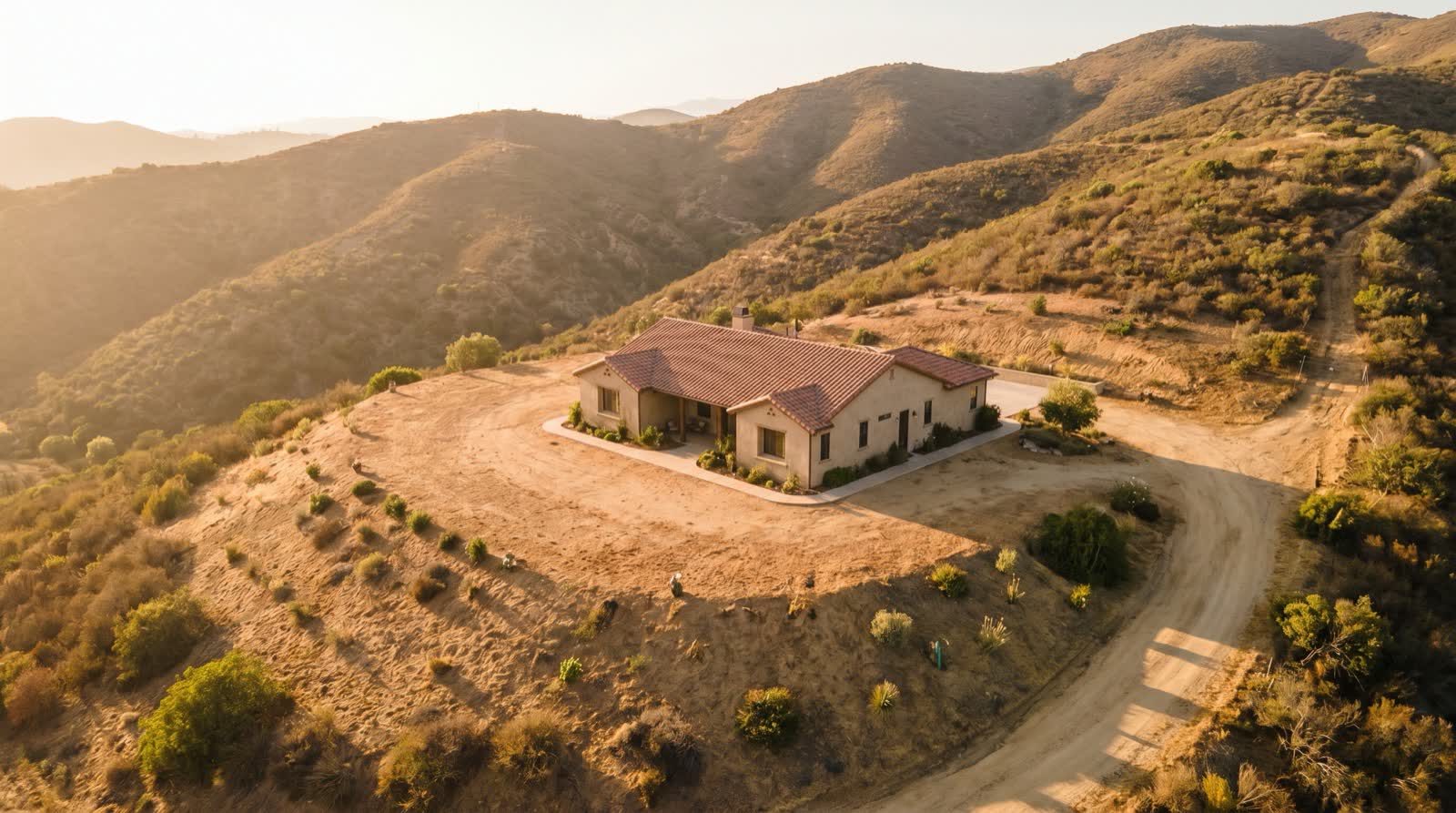
In a wildfire, most homes don't ignite from the flame front — they ignite from embers landing on and around the roof, sometimes a mile from the fire. If you're in a designated high fire-hazard severity zone (and after the recent fire seasons, more of SoCal is than ever), the roof is the single biggest hardening decision you'll make.
Class A or nothing
Roof assemblies are rated A, B, C, or unrated. In fire zones, Class A is the requirement and the only sane choice anywhere near brush. The familiar materials all get there:
- Clay & concrete tile: the classic fire-country roof — the material is literally fired in a kiln. One catch: open ends at eaves must be bird-stopped/mortared so embers can't nest underneath.
- Asphalt shingle: most architectural lines are Class A as a system — affordable hardening.
- Metal: noncombustible, sheds embers, and pairs well with ember-resistant venting.
- Fire-retardant treated wood shake: for homes that need the wood look legally — we stock it and know which cities accept what.
The details that actually save houses
Inspectors and insurers increasingly look past the surface: ember-resistant vents, screened openings, metal valley flashings, clean gutters (or gutter guards), and no gaps at the roof edge. A Class-A surface over an ember-welcoming attic vent is theater. Any contractor we refer in fire country knows this checklist cold.
Insurance reality
A documented Class-A re-roof with ember hardening is one of the few things that genuinely helps in California's brutal insurance market. Keep the permit and product paperwork — your agent will want it. The counter can print product fire-rating docs for anything we sell; just ask.
Written by the counter crew at South Coast Shingle — supplying Southern California roofing & masonry since 1946. Questions? Long Beach (800) 540-7626 · Laguna Niguel (800) 580-7626.