
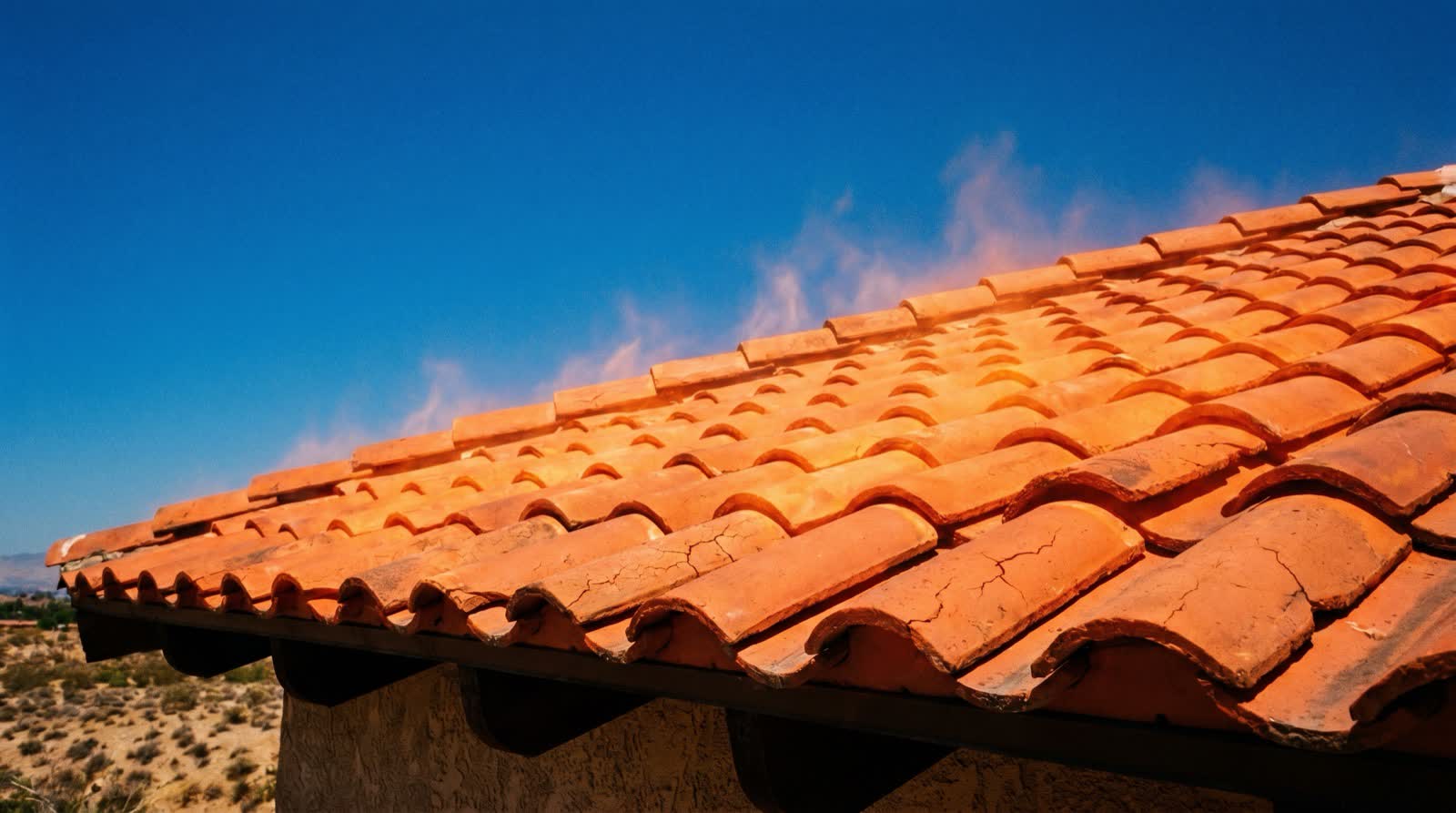
SoCal roofs don't die of storms — they die of sunshine. Eighty years of replacing the region's roofs has taught us the real schedule, and it's mostly a UV story plus one corrosive wildcard near the coast.
The honest lifespan table
- Architectural asphalt shingle: 20–30 years. The binder dries out and granules shed — south-facing slopes go first.
- Concrete tile: 50+ years for the tile itself. The underlayment beneath it is the real clock: 25–35 years, then it's re-felt time even if the tiles look perfect.
- Clay tile: 75–100+ years. Same underlayment caveat — the tiles get reused, the paper underneath gets replaced.
- Standing-seam metal: 40–70 years with a quality Kynar finish. Near the beach, ask about coastal-rated coatings — salt air is the one thing that ages metal faster here.
- Natural slate: 100+ years. You will not buy a second one.
What shortens any of them
Poor attic ventilation cooks a roof from beneath — we've watched it take a decade off shingles. Foot traffic cracks tile. Cheap underlayment under premium tile is the saddest money ever saved. And skipped flashing details around chimneys and valleys cause more failures than the roofing material ever does — which is why the installer matters more than the brand.
The takeaway
If your asphalt roof is past 20 in SoCal sun, start planning before it starts leaking — you'll make better decisions without a tarp on the lawn. If your tile roof is past 25, it's the underlayment, not the tile, that deserves an inspection. Either way, the people at our counters have seen your situation a thousand times. Come ask.
Written by the counter crew at South Coast Shingle — supplying Southern California roofing & masonry since 1946. Questions? Long Beach (800) 540-7626 · Laguna Niguel (800) 580-7626.